Dive Brief:
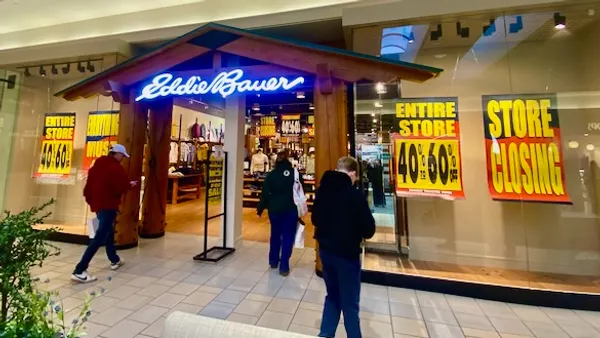
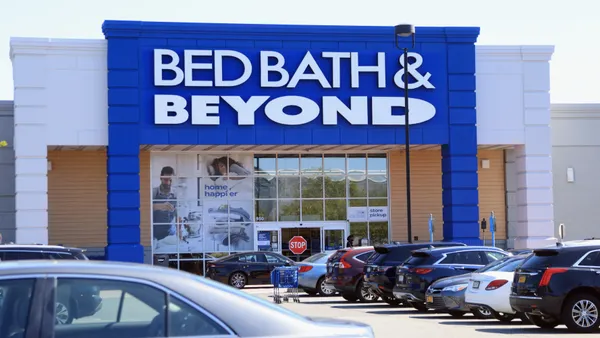
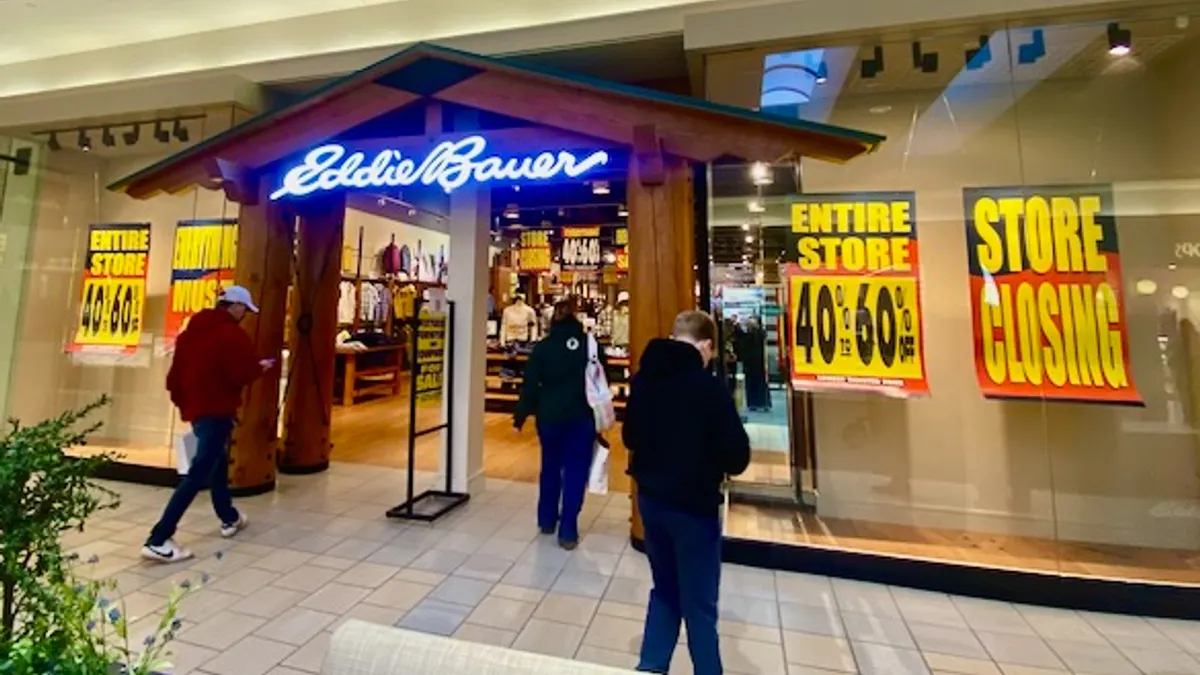
- Growth in e-commerce, aided by AI, is poised to lead retailers to close more than 40,000 stores over the next five years, UBS analysts led by Michael Lasser said in a Thursday research note. Department stores and specialty retailers are most at risk, while off-pricers will keep expanding, they said.
- Current U.S. policies — including tariffs and net-negative immigration — could drive further closures, too, if they remain in place, the analysts found.
- Speed, location, assortment, experience and price are increasingly important differentiators, and consumers are prioritizing experiences over goods. Large chains like Walmart, Costco and Target stand to benefit, as many small and independent retailers struggle to withstand these trends, UBS said.
Dive Insight:
From the third quarter 2024 to the same period in 2025, there were 5,000 fewer stores in the U.S., UBS said, citing Bureau of Labor Statistics data, a shift from recent years when the country saw more openings than closures.
As of that point, there were fewer than three stores for every 1,000 people in the U.S., down about 12% from 2003. If the country’s population falls — which hasn’t happened yet but could given flat birth rates and today’s immigration policies — the decline could drive nearly 70,000 store closures, per UBS.
“While the sector is closer to equilibrium today than it was several years ago, it has not yet reached stasis,” the analysts said. “This trend should reward the larger, better positioned retailers and penalize the smaller, marginal retailers.”
UBS analysts also see relentless growth in e-commerce as a major reason for closures, though not all observers see this as clear-cut.
Online sales now account for more than 20% of total U.S. retail sales, up from just over 10% in 2019, and the UBS team expects e-commerce to reach 27% by 2030. However, analysts from Colliers and elsewhere believe the impact has stabilized.
It’s possible that retailers haven’t adequately positioned their stores to be worth the trip. Research from WD Partners has consistently found that consumers frequent stores where sensory details and customer service outweigh the convenience of online shopping.
Placer.ai researchers recently found that many retailers are under-leveraging their stores despite shoppers’ preference for physical locations for a variety of reasons — including to check out products in person, enjoy the shopping experience and discover merchandise.
Both Placer.ai and UBS found that AI will help out physical retail as well as e-commerce, though UBS said the “combination of eCommerce and AI-enabled shopping has been steadily siphoning sales away from physical stores, reducing the revenue needed to sustain large store fleets.”
“Physical locations remain critical components of the omni-channel ecosystem, particularly as fulfillment hubs for delivery and pickup,” they said. “Still, we continue to believe the U.S. retail sector has excess store capacity.”
The pressure on consumers from higher prices is also a factor, with tariffs alone driving store closures significantly if they stay in place until 2030, UBS said.
“Higher tariff levels increase the likelihood that a greater share of these costs is ultimately passed through to consumers,” the analysts said, noting that a third of U.S. households make less than $50,000 annually.
UBS estimates that retail sales could drop about 0.5% on an annual basis as retailers absorb about $100 billion of increased costs while lower-income households cut down on spending.